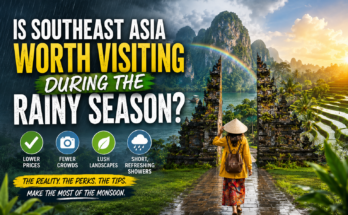
Is Southeast Asia Worth Visiting During the Rainy Season?

is southest asia worth visiting during the rainy season

If you are planning a trip to Southeast Asia, you have probably run into the horror stories. Someone’s cousin got stuck on a Thai island for a week while roads turned into rivers, or a TikTok video showed backpackers wading through knee-deep water in Hoi An with their luggage balanced on their heads.

The phrase “monsoon season” sounds ominous, conjuring up images of endless grey skies and relentless, non-stop torrential downpours that ruin vacations.

But let’s get real for a moment: Is it actually that bad? Or have the internet forums just blown it out of proportion?

As long-term travelers who have spent years navigating this exact region through every imaginable weather cycle, we are going to let you in on a big secret: the rainy season is often the absolute best time to visit Southeast Asia, especially if you are on a budget or hate fighting through wall-to-wall crowds.

Here is everything you actually need to know about traveling Southeast Asia during the wet season, written from real boots-on-the-ground experience.

The Reality Check: What the “Monsoon” Actually Looks Like

The biggest misconception people have is that the rainy season means it rains all day, every day.

In reality, a typical monsoon day looks like this: you wake up to clear, sunny skies. You head out, get iced coffee, do some sightseeing, and sweat through your shirt because it is still incredibly warm. Around 3:00 PM or 4:00 PM, the sky turns a dramatic shades-of-bruise purple. The wind picks up, and for about 45 to 90 minutes, the sky opens up in a spectacular, earth-shaking tropical deluge.

And then? It stops. The clouds part, the air feels crisp and completely cleared of dust, the temperature drops to a comfortable breeze, and everyone goes right back to eating street food on the sidewalk.

Instead of a trip-ruining disaster, the daily rain becomes a predictable rhythm. You just learn to plan your day around it. You don’t stay inside all week; you just make sure you’re sitting in a cozy café or getting a cheap massage when the afternoon sky turns dark.

the reality of monsoon weather

The Ultimate Weather Cheat Sheet: Who Gets Wet When?

Southeast Asia isn’t a monolith. Because of how the mountain ranges and ocean currents interact, different parts of the region experience their wet seasons at completely opposite times of the year. If it is pouring in Bangkok, it might be perfectly dry and sunny in Bali.

Here is how the region generally splits up:

The Continental Zone (June to October)

  • Countries: Thailand (most of it), Laos, Cambodia, Vietnam, Myanmar, and the Philippines.

  • What to expect: Hot and humid conditions building up from April, leading into heavy afternoon downpours throughout the summer and early autumn.

The Equatorial Zone (October to March)

  • Countries/Regions: Indonesia (Bali, Lombok, Java), Singapore, and parts of Malaysia (like Kuala Lumpur and the East Coast).

  • What to expect: While Thailand is enjoying its peak dry winter, Indonesia is getting its heaviest rainfall.

The Strange Exceptions

There are microclimates all over the place that defy these rules. For instance, the Gulf Islands of Thailand (Koh Samui, Koh Phangan, and Koh Tao) experience their heavy rains much later in the year—typically from October to December—meaning they are fantastic, sunny escapes during July and August when the rest of Thailand is soaking wet. Similarly, Siargao in the Philippines sees its main rainy season hit between December and February.

The Major Perks of Traveling in the Wet Season

Most people only focus on the downsides, but the benefits of traveling during the low season are massive. If you’re willing to carry a small umbrella or throw on a cheap poncho, here is what you get in return:

1. You Get Iconic Landmarks to Yourself

Have you ever tried to see the sunrise at Angkor Wat in January? You will be standing shoulder-to-shoulder with thousands of people, all jostling to get the exact same photo.

During the rainy season, those crowds drop drastically. You can wander through the ancient temples of Cambodia, cruise through Vietnam’s Ha Long Bay, or walk through Bali’s rice terraces without feeling like you’re trapped in an amusement park line. You get the space to actually breathe and take in the magic of these places.

2. Your Budget Stretches Twice as Far

When tourist numbers drop, local businesses get competitive. Luxury boutique hotels that charge $150 a night in January will routinely slash their prices by 50% or more just to keep their rooms filled.

Flights are cheaper, tour operators are highly open to negotiation, and you can secure beautiful private rooms for the same price you’d pay for a cramped hostel dorm bed during peak season. If you are a long-term backpacker, traveling now means your money will last months longer.

3. The Landscapes Look Spectacular

During the peak dry season, parts of Southeast Asia can look a bit dusty, brown, and baked by the sun. The rainy season turns the entire region into an incredibly vibrant, neon-green paradise.

The rice paddies fill with water and mirror the sky, the jungle canopy thickens, and wildflowers bloom everywhere. It is easily the most visually beautiful time of year for photography.

4. Waterfalls Are Actually Worth Seeing

If you visit the famous Erawan Falls in Thailand or the waterfalls of the Bolaven Plateau in Laos during the dry season, you might be disappointed to find a sad, slow trickle of water.

In the wet season, these waterfalls turn into thundering, majestic forces of nature. The swimming holes are deep, the mist clears the heat from your face, and white-water rafting tours become fast, adrenaline-pumping adventures.

5. Cleaner Air, Cooler Breezes

For example Bangkok, Hanoi and Chiang Mai can be very congested with smog and dust. Nature’s air purifier, rain washes the pollution out of the sky every day. When it rains it pours, and the temperature drops considerably, a welcome relief from the otherwise suffocating tropical heat.

The Real Cons: What You Have to Deal With

We’re not going to sugarcoat it—there are real drawbacks to travelling in the rain. You need to know what you’re getting into so you can set your expectations.

1. Transport Delays and Route Changes

This is the single biggest logistical headache. Heavy rain can cause localized flash flooding, which means train tracks can wash out, buses have to take slow detours, and ferry captains will outright cancel boat trips if the seas get too rough.

If you have a hyper-strict, fast-paced itinerary where you need to catch three flights in five days, the rainy season will stress you out. You need a flexible schedule that allows for an extra day of travel if a storm rolls in.

2. Mosquito Boom

Mosquitoes breed in standing water and there is plenty of it in the rainy season. You will notice a major uptick in these pests, which increases the risk of mosquito-borne illnesses like Dengue Fever. You have to be incredibly diligent about applying high-quality insect repellent and ensuring your accommodation has proper screens or bed nets.

3. Murky, Churning Waters for Diving and Snorkeling

If your absolute dream is to spend two weeks scuba diving and looking for crystal-clear 30-meter visibility, the monsoon season will disappoint you.

The heavy rains wash soil and sediment from the rivers into the ocean, and the strong winds stir up sand from the seabed. This makes the water cloudy and significantly reduces visibility. Marine life tours are also the first things to get canceled when waves get choppy.

4. Flash Floods in Urban Centers

Some cities, like Hoi An in Vietnam or sections of Bangkok, have older drainage systems that easily get overwhelmed by a heavy hour-long downpour. Streets can fill with water incredibly fast. While locals take this completely in stride—often continuing to ride their scooters through ankle-deep water—it can make walking around town a bit gross and difficult.

Survival Guide: 6 Insider Tips for Monsoonal Travel

If you decide to make the trip, don’t pack like you’re going to a rainy winter in Europe. Tropical rain requires a totally different approach.

  • Ditch the Sneakers, Wear Sandals: Do not bother wearing canvas sneakers or heavy hiking boots around cities in the rain. Once they get soaked, the high tropical humidity means they will take three days to dry out, and they will quickly start to smell terrible. Instead, wear high-quality, water-resistant strappy sandals or simple flip-flops. If your feet get wet, you can easily wipe them dry with a towel.

  • Buy a 7-Eleven Poncho: Don’t waste valuable space in your backpack hauling a heavy, expensive Gore-Tex rain jacket from home. It is too hot and humid to wear them anyway—you will just end up sweating profusely inside the jacket. Instead, do exactly what the locals do: walk into any neighborhood 7-Eleven and buy a cheap, lightweight plastic poncho for a dollar. They keep you fully covered, keep your daypack dry, and are incredibly breathable.

  • Invest in Dry Bags: A heavy downpour will penetrate a standard backpack zipper in minutes. Buy a small, 10-liter or 20-liter roll-top dry bag to keep your camera, phone, passport, and extra clothes completely safe while you are moving between destinations.

  • Embrace the Café Culture: When the sky opens up, do not panic. Find the nearest open-air café, order a Vietnamese iced coffee or a fresh coconut, and just sit back and watch the rain. Some of the best travel memories come from getting stuck in a local bar with other stranded travelers, waiting out a storm together.

  • Keep Your Itinerary Loose: Never book non-refundable, tight connecting travel links during the peak wet months. Give yourself a buffer day before any international flight home just in case a ferry or bus is delayed by weather.

  • Track the Typhoons: Standard rain showers are harmless, but tropical depressions and typhoons are serious. Keep an eye on local weather apps and news outlets, especially if you are traveling coastal areas of Vietnam or the Philippines between August and October. If a major storm warning is issued, move inland or alter your route.

The Verdict: Should You Go?

  • Go if: You want to save money, you want to avoid massive tourist crowds, you love lush green landscapes, and you have a relaxed, flexible travel style that allows you to go with the flow.

  • Skip if: You are on a strict, short 7-day vacation, your main goal is getting a perfect sun tan on the beach every day, or you get stressed out by transport delays and changing plans.

Frequently Asked Questions (FAQs)

1. When is the worst time to visit Southeast Asia?

The most challenging time to visit varies significantly by country, but for much of continental Southeast Asia (Thailand, Laos, Cambodia, Vietnam), the transition months of September and October generally see the heaviest, most disruptive rainfall of the monsoon cycle.

Additionally, you should be aware of the “Burning Season” which happens during the dry period from February to April in Northern Thailand (Chiang Mai), Laos, and Myanmar. During this time, agricultural burning creates severe smog and very poor air quality, making it a highly uncomfortable time for outdoor sightseeing.

2. Is it worth going to Thailand during the rainy season?

Absolutely. Thailand’s infrastructure handles the rain incredibly well. Even during the peak wet months (July to October), the rain rarely stops you from enjoying your trip.

Bangkok has endless indoor shopping malls, temples, and world-class dining to explore during downpours, while the northern jungles around Chiang Mai look spectacularly green. If you want beach time, you just have to choose the right location—head to the Gulf Coast islands like Koh Samui or Koh Phangan, which stay relatively dry during the traditional summer monsoon.

3. Which country is best to visit in the rainy season?

If you’re looking to travel during the European/American summer months (June-August), Indonesia is an incredible choice. Thailand and Vietnam are in the middle of their wet seasons, but Indonesia is dry, so you’ll get beautiful, sunny beach weather all over Bali, Lombok and the Komodo Islands.

If you are looking to travel during the winter months (November to February) and want to avoid heavy rains, Thailand, Cambodia, and Vietnam are at their absolute dry-season best.

4. Is it worth going to Vietnam in the rainy season?

Yes, but you need to understand Vietnam’s highly complex climate geography. Vietnam is long and narrow, meaning it is split into three distinct weather zones:

  • North Vietnam (Hanoi, Sapa, Ha Long Bay): Wet season runs from May to September. It gets very hot and humid, but the terraced rice fields in Sapa look an incredible vibrant green.

  • Central Vietnam (Da Nang, Hoi An, Hue): Wet season hits hard between September and December. Hoi An is highly prone to urban flooding during these months, so it is often best avoided during late autumn.

  • South Vietnam (Ho Chi Minh City, Mekong Delta): Wet season runs from May to November. It follows the classic tropical pattern of short, intense afternoon downpours followed by clear skies.

5. Which is the best island country to visit from India?

Sri Lanka and Indonesia are both phenomenal, highly accessible options. Sri Lanka is geographically very close to India so flights are short and cheap. It has a great blend of old culture, wildlife safaris and beautiful beaches. Sri Lanka has two different monsoons on either side of the island so you can always find some sunny beach somewhere on the island no matter what month you visit.

Indonesia is an island paradise. With thousands of islands, tropical summer weather and visa options for Indian passport holders, you can experience true island hopping.

6. What is the most beautiful country to visit from India?

Beauty is very subjective but Vietnam has very much become one of the most popular and beautiful places to visit for travellers from India.

There is so much variety in the landscapes, from the stunning limestone karsts of Ha Long Bay and Ninh Binh to the high mountain passes of the north in Ha Giang, the well-preserved historical beauty of Hoi An and the wide, peaceful waterways of the Mekong Delta. It’s super beautiful, super cheap, and super easy to get an e-visa for.

7. Can I ride a scooter in the rainy season?

Yes, but you need to be extremely cautious. Roads in Southeast Asia can become incredibly slick the moment rain mixes with the dust and oil on the asphalt.

When a heavy downpour starts, the best move is to pull over under a shelter, grab a hot drink, and wait for the heaviest part of the storm to pass. Never drive through deep, moving floodwaters where you cannot clearly see the condition of the road underneath.

8. Will the rain affect the local night markets?

For the most part, no! Night markets are a fundamental part of daily life for locals, not just tourists. Most market stalls have large, heavy-duty canvas tarps that they roll out the second it starts to rain.

While a massive storm might cause a few outdoor vendors to pack up early, most markets stay open, and wandering through a bustling market under the cover of tarps while the rain drums overhead is a classic Southeast Asian experience.

9. Do I need to book my hotels in advance during the rainy season?

Not at all, and that is one of the biggest perks of low-season travel. Because hotels rarely fill to capacity, you can easily book your rooms just a day or two in advance as you travel. This gives you the ultimate freedom to change your route on the fly. If you check the weather report and see a week of heavy storms heading toward your current location, you can easily hop on a bus or a cheap flight and head somewhere sunny without losing money on non-refundable bookings.

10. How do I protect my health during the monsoon?

The two main things to watch out for are mosquito bites and water-borne bacteria. Drink exclusively bottled or filtered water, and avoid walking through deep city floodwaters with open cuts on your feet or legs, as urban runoff can carry bacteria. Have a good insect repellent with DEET or Picaridin and use it often, particularly at dawn and dusk when mosquitoes are most active.

Leave a Reply

Your email address will not be published. Required fields are marked *